How Circulation Was Discovered and Explained by William Harvey
ALL BLOGSSCIENCE
Before Circulation Was Understood
There was a time when people did not actually know how blood moved through the body. That sounds surprising now, but earlier ideas were very different. Many believed blood was constantly being created in the liver and then used up by the body. It was not seen as something that moved in a continuous loop. Instead, it was more like a one-way supply that got consumed. At first, that idea seems simple enough, but something about it doesn’t fully add up.
The Problem With Earlier Theories
If blood were constantly being used up, the body would need to produce huge amounts of it all the time. When you think about the actual volume of blood in the body, this raises a question. How could the body keep replacing it so quickly? And why would there be no clear evidence of this constant production and loss? These inconsistencies started to make scientists question the older explanations.
William Harvey Looks Closer
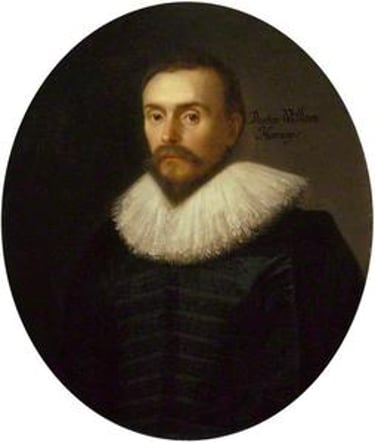
William Harvey approached the problem differently. Instead of accepting what was already believed, he focused on observation and measurement. He studied the heart, blood vessels, and how blood behaved in living animals. What made his work different was that he did not just describe what he saw. He tried to calculate and test it.
The Idea of a Closed System
Harvey proposed something new. Blood does not get used up. It moves in a continuous circuit throughout the body. The heart acts as a pump, pushing blood through arteries, and then it returns through veins. This idea of a closed system changed everything. Instead of blood being produced and lost, it was being reused and circulated.
How He Proved It
Harvey used a combination of observation and logical reasoning. He studied how valves in veins allowed blood to move in one direction only. When he pressed on veins, he could see how blood flowed and where it stopped. He also estimated how much blood the heart pumped with each beat. When he multiplied that over time, the numbers were too large to support the idea that blood was constantly being created. It made more sense that the same blood was moving in a loop.
Why This Was a Big Shift
This discovery was important because it replaced assumption with evidence. Instead of relying on traditional beliefs, Harvey showed that the body could be understood through experiment and reasoning. It also introduced a more mechanical view of the body, where systems have structure and function that can be studied.
What This Changed in Medicine
Once circulation was understood, it changed how doctors thought about the body. It helped explain how nutrients, oxygen, and waste move through tissues. It also made it possible to understand diseases related to blood flow, the heart, and blood vessels. Without this concept, modern cardiovascular medicine would not exist in the same way.
Why It Still Matters Today
Today, the idea of circulation is basic knowledge. But every time you think about heart rate, blood pressure, or oxygen delivery, you are using the concept Harvey explained. It is one of those discoveries that became so fundamental that it feels like it was always known, even though it had to be proven.
Final Thoughts
Harvey’s work shows how questioning simple ideas can lead to major discoveries. What seemed obvious at the time turned out to be incomplete. And by looking closer, measuring carefully, and asking the right questions, he changed how we understand the human body. It also leaves you thinking. What ideas today might still be accepted without being fully questioned?
Reference: https://pmc.ncbi.nlm.nih.gov/articles/PMC2776239/

Related Stories
Powered by TeentoMD.com © 2025
TeentoMD.com empowers the generation of tomorrow for a brighter future and hope for every individual.
Link your inbox
Subscribe to our newsletter and never miss a story.
We care about your data in our privacy policy.