The Hidden Language of Cells: How They Communicate to Keep You Healthy
ALL BLOGSSCIENCE

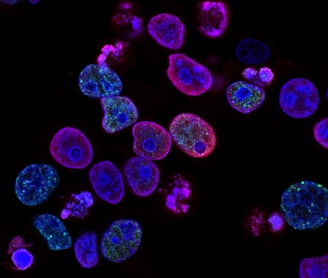
Right now, as you read this, trillions of cells inside your body are talking to each other. They are not using words or sounds, but they are constantly sending signals, sharing information, and coordinating actions that keep you alive. Every heartbeat, every breath, every moment of healing or thinking depends on one thing: communication between cells. This silent language is what allows your body to function as a unified whole instead of a collection of individual parts. Cell communication is one of the most fascinating and complex systems in biology. It’s how your body knows when to grow, when to heal, and when to fight off infections. Understanding how this communication works gives us insight into everything from how we stay healthy to how diseases spread.
How Cells Send and Receive Messages
Cells communicate through chemical signals that travel between them, similar to how messages travel through a network. These signals are carried by molecules like hormones, neurotransmitters, and proteins. Think of each cell as a tiny computer. It sends out messages, receives instructions, and responds accordingly. The communication process usually involves three key steps:
Signal production: One cell releases a signaling molecule.
Signal reception: Another cell detects that molecule through specific receptors on its surface.
Response: The receiving cell changes its behavior based on the message it received.
The type of signal and the location of the target cell determine how the message travels. Some signals move only a few cells away, while others can travel through the bloodstream to reach distant parts of the body.
The Main Types of Cell Communication
There are several ways cells communicate, each serving a different purpose.
1. Direct Contact
Some cells communicate by touching. Their membranes have special proteins that allow them to exchange molecules directly. This is common in the immune system, where cells need to quickly recognize and respond to threats.
2. Paracrine Signaling
In this type, cells send signals to nearby cells. The messages do not travel far and usually deal with local coordination, like repairing tissue after an injury.
3. Endocrine Signaling
Here, signals travel long distances through the bloodstream in the form of hormones. For example, your pancreas releases insulin into the blood to help regulate glucose levels across the entire body.
4. Synaptic Signaling
Neurons use this method to communicate across tiny gaps called synapses. Neurotransmitters like dopamine and serotonin carry the signal from one nerve cell to another, helping you move, think, and feel. Each of these systems allows your body to stay in balance, or what scientists call homeostasis.
The Role of Receptors: How Cells “Listen”
Messages between cells only work if the receiving cell has the right receptor. These receptors are proteins that sit on the cell membrane or inside the cell, shaped to fit only specific signaling molecules, like a lock and key. When the correct signal binds to a receptor, it triggers a series of chemical reactions inside the cell called a signal transduction pathway. This pathway can activate genes, open ion channels, or start new cellular processes. For example, when adrenaline binds to receptors on your heart cells, it causes your heartbeat to speed up. When insulin binds to receptors on muscle cells, it allows glucose to enter and be used for energy. If receptors are damaged or missing, communication breaks down. This is one reason why some diseases occur, because the body’s cells stop listening to each other correctly.
When Communication Breaks Down
Just like in human relationships, misunderstandings between cells can cause serious problems. When signaling goes wrong, cells may send the wrong message, ignore the right one, or fail to stop sending signals altogether.
For example:
Cancer occurs when cells stop responding to signals that tell them to stop dividing. They grow uncontrollably, forming tumors.
Diabetes develops when insulin signaling breaks down, preventing cells from properly taking in glucose.
Autoimmune diseases happen when immune cells misinterpret messages and attack the body’s own healthy cells.
Every major illness, from infections to neurological disorders, involves some kind of communication error at the cellular level. Understanding these signals helps scientists design treatments that restore balance to the system.
The Immune System: A Network of Rapid Messages
Your immune system is one of the best examples of cell communication in action. When a virus enters your body, immune cells send out chemical signals called cytokines to warn others of the invader. These cytokines attract more immune cells to the infection site, triggering inflammation and defense mechanisms. Once the threat is gone, new signals tell the body to calm down and repair the tissue. When this communication goes wrong, it can lead to chronic inflammation or autoimmune conditions. Too many cytokines can cause an overreaction, which is why balance in cell communication is critical.
The Brain: Where Electrical and Chemical Signals Meet
In the nervous system, communication happens even faster. Neurons use electrical impulses to send information through long extensions called axons. When the signal reaches the end of the neuron, it triggers the release of neurotransmitters that cross the synapse and carry the message to the next cell. This process happens in milliseconds. It’s how your brain processes thoughts, movements, and emotions almost instantly. If you touch something hot, for example, neurons send a rapid electrical message to your spinal cord, which immediately tells your muscles to pull away. At the same time, the signal reaches your brain, helping you remember not to touch that surface again. These instant feedback loops depend on precise, constant communication between billions of neurons.
How Scientists Study Cell Communication
Researchers use several tools to understand how cells talk to each other. Techniques like fluorescent imaging allow scientists to visualize signaling molecules in real-time. They can watch how a signal spreads from one cell to another and how changes in conditions, like temperature or chemicals, affect the conversation. Modern medicine has also developed treatments that can mimic or block cell signals. For instance, beta blockers are drugs that prevent adrenaline from binding to receptors in the heart, helping to lower blood pressure. Insulin therapy replaces missing signals in diabetic patients. By decoding this hidden language, scientists are finding ways to fix broken communication pathways and design smarter treatments for complex diseases.
Why This Matters
The way your cells communicate determines how healthy you are. It controls everything from your heartbeat to your immune defense, your metabolism, and even your emotions. When the system works well, you feel balanced and strong. When it falters, the consequences ripple across your body. Understanding the language of cells doesn’t just help scientists; it can also change how we think about health. Every lifestyle choice you make, from sleep, exercise, nutrition, and stress, affects the way your cells communicate. For example, regular exercise improves insulin sensitivity and blood flow, which supports better signaling. Sleep helps cells repair themselves and reset communication pathways. A balanced diet provides the nutrients that keep signaling molecules functioning correctly. Your habits are part of the conversation, too.
Final Thoughts
Your body is like a vast city, and your cells are its citizens. Each one has a role, a purpose, and a voice. The harmony of that city depends on how well its citizens communicate. When signals flow smoothly, everything works together in balance. When they don’t, the system breaks down. So the next time you think about your health, remember that it’s not just about one organ or one part of your body. It’s about trillions of cells talking, listening, and responding to each other every second. You are, quite literally, made of communication, and your body’s ability to stay connected is what keeps you alive.
Reference: https://iu.pressbooks.pub/humanphys/chapter/cell-to-cell-communication
