What Spending Time in Nature Teaches About Scientific Observation
ALL BLOGSINSPIRATION

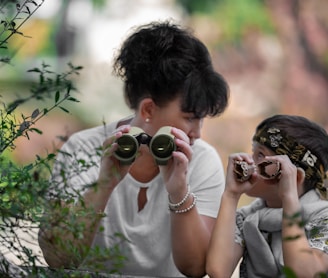
In classrooms, observation is often treated as a task. Look closely, record what you see, move on. But in nature, observation does not feel forced. It unfolds slowly. When you sit outside, no timer and no worksheet to guide your attention. You notice things not because you are told to, but because your curiosity pulls you there. This difference matters. Nature changes observation from a requirement into a habit.
Nature Teaches Patience Before Precision
Scientific observation requires patience, yet many students are trained to rush toward conclusions. In nature, rushing rarely works. If you move too quickly, you miss patterns. Birds disappear. Insects freeze. Clouds shift before you finish interpreting them. Spending time outdoors teaches that observation comes before explanation. You learn to wait, to watch, and to let details reveal themselves over time.
The Senses Become Active Tools
In textbooks, observation is mostly visual. In nature, all senses contribute. You hear changes in sound before you see movement. You feel temperature shifts before weather changes become visible. You smell soil after rain. These sensory inputs sharpen awareness and remind you that observation is not passive. It is active engagement with an environment that is constantly communicating.
Nature Reduces the Need to Control Outcomes
In lab settings, experiments often aim for predictable results. Nature does not cooperate that way. You cannot control wind, light, or behavior. This teaches an important scientific lesson. Observation is not about forcing outcomes. It is about noticing what actually happens. Letting go of control improves accuracy because it removes expectation-driven bias.
Patterns Emerge When Attention Is Sustained
Short observation rarely reveals much. Long observation reveals patterns. In nature, repetition is subtle. A plant leans slightly differently throughout the day. Insects follow invisible paths. Light changes how surfaces look. Spending time outdoors trains the mind to notice gradual change. This skill is central to scientific thinking, yet difficult to learn in fast-paced environments.
Assumptions Get Challenged Quietly
Nature often contradicts what you think you know. A plant survives where you assumed it could not. An animal behaves differently than expected. These moments force a reevaluation of assumptions. Scientific observation depends on this flexibility. Nature teaches that being wrong is not failure. It is information that improves understanding.
Observation Strengthens When Distraction Fades
Outside, there are fewer artificial interruptions. No screens demanding attention every few seconds. As distraction fades, observation deepens. You begin to notice layers rather than highlights. This sustained attention mirrors how scientists work in the real world. Good observation requires presence more than intelligence.
Time Changes What You Notice
The longer you stay, the more your perception shifts. At first, only obvious details stand out. With time, subtle interactions emerge. This progression teaches that observation improves with familiarity. It also teaches humility. What you miss at first is not a failure of effort, but a reminder that understanding grows gradually.
Nature Encourages Questions Instead of Conclusions
Spending time in nature rarely leads to quick answers. Instead, it produces questions. Why does this happen here and not there? What changes when conditions shift? Scientific observation thrives on curiosity. Nature reinforces that questions are not gaps in knowledge. They are starting points for deeper inquiry.
Final Thoughts
Spending time in nature teaches that scientific observation is not about speed, certainty, or control. It is about patience, presence, and openness to being corrected. Nature trains the mind to notice before naming, to question before concluding, and to respect complexity without rushing to simplify it. These lessons apply far beyond the outdoors. They shape how we learn to see the world carefully, honestly, and with curiosity.
Reference: https://richmondwaldorf.com/time-in-nature-can-spark-a-lifetime-of-science-curiosity/
